How to whiten teeth without damaging enamel
Written by Visage Score, based on the studies cited at the end of the article.
Charcoal powder and lemon-and-baking-soda paste are all over social media. Before you pick one, work out which yellow you're dealing with: the stain sitting on the tooth, or the colour inside it.
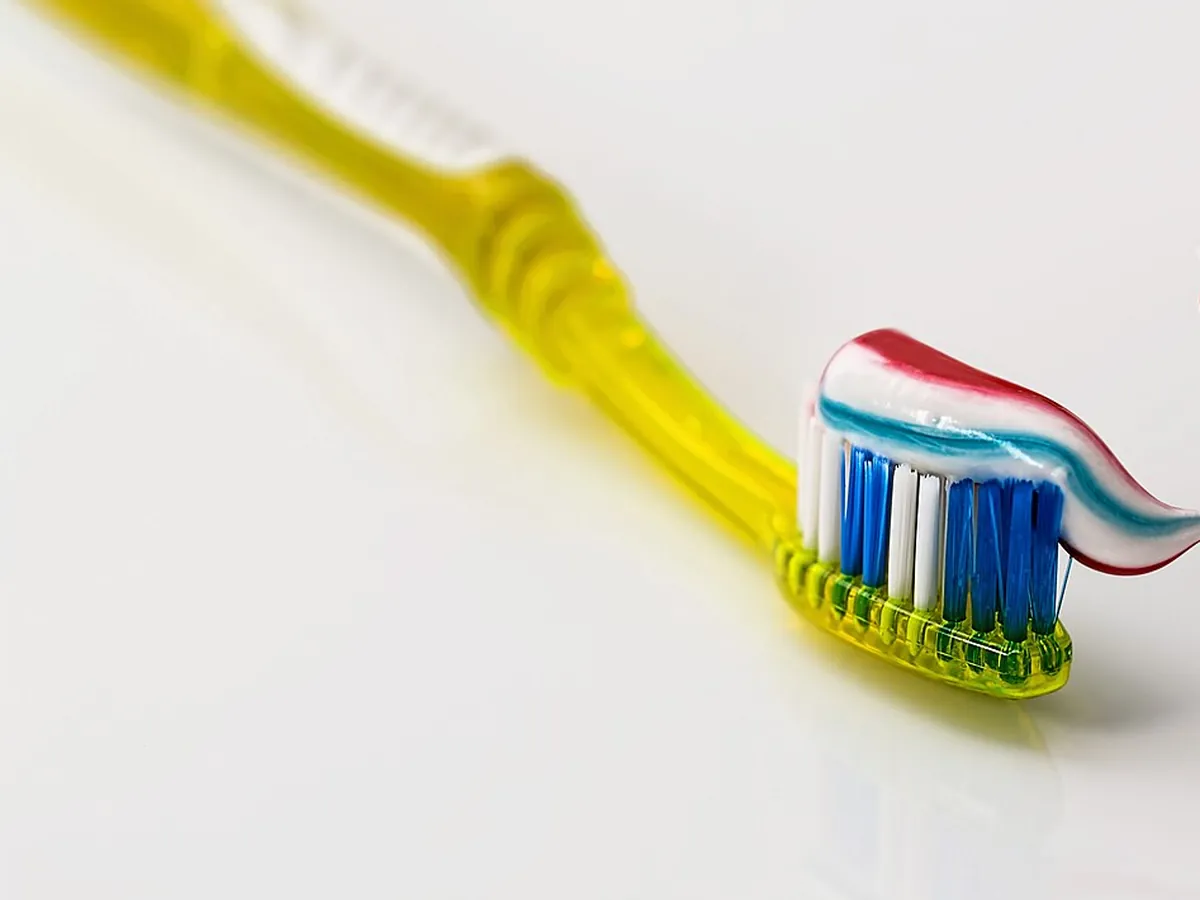
The American Dental Association (ADA) sorts tooth discolouration into two kinds. Extrinsic stains sit on the enamel surface: tobacco, coffee, tea, red wine, cola, dark berries. Intrinsic discolouration is inside the tooth.
The most common intrinsic cause is simply age. Enamel thins and turns more translucent over the years, so the yellower dentin underneath shows through. No toothpaste or powder can scrub that away; only peroxide can lighten it. So the useful question for any method is not just “does it whiten?” but “which stain does it reach, and what does it do to enamel on the way?”
Method by method: what you can expect, what you risk
| Method | Expected effect ↔ risk |
|---|---|
| Brushing twice a day, 2 minutes, fluoride toothpaste | Removes plaque and some surface stain ↔ no risk to enamel |
| Baking soda toothpaste | Reduces surface stain ↔ low abrasivity, within safety limits |
| “Whitening” toothpaste | Surface stain only ↔ possible sensitivity or irritation |
| Scale and polish at the dentist | Removes stubborn stain and tartar ↔ done by a professional |
| Neat baking soda mixed with lemon | No proven benefit ↔ acid softens enamel, scrubbing wears it |
| Charcoal powder or toothpaste | Unproven ↔ enamel abrasion and more decay reported |
| Online kits, salon whitening | Works less well ↔ can harm teeth and gums |
| Dentist-supervised peroxide bleaching | Lightens the inner colour too, lasts about 3 years ↔ temporary sensitivity and sore gums |
Based on the ADA, the NHS, Brooks et al. (JADA, 2017), Hara and Turssi (JADA, 2017), Li (JADA, 2017) and Saads Carvalho and Lussi (Monographs in Oral Science, 2020).
Charcoal: big claims, almost no trials
In 2017, Brooks, Bashirelahi and Reynolds reviewed everything published on brushing with charcoal for the Journal of the American Dental Association. Of 118 potentially relevant papers, thirteen described people brushing with raw charcoal or soot, and none was a controlled trial lasting three months or more. Three reported harm: more cavities and worn enamel.
The authors also looked at the first fifty charcoal products sold online. They found “detox”, antibacterial and antiviral claims with nothing behind them, and clay in a third of the products. Their bottom line: there isn't enough evidence that charcoal works, or that it is safe.
Baking soda isn't the villain. Lemon is
Baking soda gets blamed for wearing teeth down, but inside a toothpaste that isn't what the research shows. A 2017 JADA review by Hara and Turssi notes that it is softer than enamel and dentin, so it is only mildly abrasive. A companion review by Li concluded that baking soda toothpastes remove surface stain effectively. Plain kitchen baking soda on its own, though, gives you no fluoride, and fluoride is what protects against decay.
Lemon is a different story. Dental erosion is enamel dissolving under repeated acid exposure, and the loss gets worse when brushing or rubbing follows (Saads Carvalho and Lussi, 2020). A lemon-and-soda paste scrubbed onto teeth combines both. The same review links vitamin C, frequent fruit juice and acidic snacks to more tooth wear, and notes that swishing an acidic drink around the mouth makes things worse. Milk and yoghurt, by contrast, look protective.
Real whitening happens at the dentist
Only peroxide products, hydrogen peroxide or carbamide peroxide, change the colour of the tooth itself. According to the ADA, hydrogen peroxide moves through enamel and dentin and can reach the pulp within about 15 minutes, which is why teeth often feel sensitive to cold afterwards.
The NHS describes two dentist-led routes: custom trays worn at home for 2 to 6 weeks, or a single in-surgery session of 1 to 2 hours. Results last around three years if you follow your dentist's advice. It isn't done at 17 or younger, isn't recommended during pregnancy or breastfeeding, and crowns, dentures and implants won't change colour. Kits from pharmacies or the internet and beauty-salon treatments, the NHS warns, don't work as well and may harm teeth and gums.
Everyday habits that cost almost nothing
- Brush twice a day for about two minutes, once last thing at night, with a toothpaste containing at least 1,350 ppm fluoride (it's printed on the tube).
- Spit, don't rinse. Water washes away the fluoride left on your teeth (NHS).
- Floss or use interdental brushes, ideally before brushing, to clear plaque along the gum line.
- Use a soft or medium brush. Electric or manual makes no difference as long as every surface gets cleaned.
- No need to give up coffee, tea or red wine. With fizzy drinks and juice, have them less often through the day and don't hold them in your mouth.
- If stains survive brushing, ask for a scale and polish instead of reaching for a powder.
Common questions
- Does baking soda damage enamel?
- In toothpaste, no. It is mildly abrasive and well within the limits regulators set (Hara and Turssi, 2017). The risk comes from DIY recipes that pair it with an acid such as lemon or vinegar, and from scrubbing hard.
- Do whitening toothpastes work?
- Partly, and only on surface stain. They mostly rely on abrasives to lift what coffee or tea left behind, and they don't change the tooth's inner colour. A 2020 systematic review cited by the ADA found them about as effective as paint-on gels and less effective than whitening strips, with similar side effects.
- Why do teeth get more yellow with age?
- Enamel thins and lets the yellower dentin show through (ADA). That's intrinsic colour, so brushing harder won't help. It will just wear away more enamel.
- What if just one tooth is getting darker?
- Get it checked. A single tooth turning grey or brown can point to decay, an old knock or a damaged nerve (ADA). Whitening isn't the first answer.
When to see a dentist
Book an appointment if your teeth become sensitive to cold or sweet things, if their surface looks hollowed or unusually smooth, or if one tooth changes colour on its own. These are signs of wear or of a problem no whitening product will fix. Teeth and gums should always be checked before any bleaching (NHS, ADA). This article is not a substitute for a dentist's advice.
Sources
- Whitening (Oral Health Topics) — American Dental Association, 2026
- Charcoal and charcoal-based dentifrices: A literature review — Journal of the American Dental Association, 2017
- Baking soda as an abrasive in toothpastes: Mechanism of action and safety and effectiveness considerations — Journal of the American Dental Association, 2017
- Stain removal and whitening by baking soda dentifrice: A review of literature — Journal of the American Dental Association, 2017
- Chapter 9: Acidic Beverages and Foods Associated with Dental Erosion and Erosive Tooth Wear — Monographs in Oral Science, 2020
- Teeth whitening — NHS (Royaume-Uni), 2025
- How to keep your teeth clean — NHS (Royaume-Uni), 2025
This information is general and does not replace advice from a doctor or dermatologist. For any concern about weight, skin or sleep, see a healthcare professional.